Water parks can be so much fun, especially on a hot summer day. From the cool rush of a wave pool, the gentle drift of a lazy river, and the pure thrill of a water slide, water parks can be the highlight of a vacation. But for millions of people living with disabilities or older adults managing physical limitations, the immediate question before packing a swim bag isn’t “Will it be fun?”, it’s “Is it actually accessible?”
At AbleTravels.com, we believe everyone deserves their day in the sun. So, let’s dive straight into the big question, break down what makes a water park truly inclusive, and arm you with the ultimate accessibility checklist for your next aquatic adventure.
Are Water Parks Accessible?
The short answer? Yes, but it’s not quite that cut and dry.
Under legislation like Title III of the Americans with Disabilities Act (ADA), recreational facilities are required to provide accessible means of entry to swimming pools, wading pools, and spas. However, the reality on the ground varies wildly.
I once was told I couldn’t wear my special water shoes (which I need as part of my disability) which practically ruined my entire experience.
While almost every modern park has a pool lift or a sloped entry somewhere on-site, the standard infrastructure often falls short when it comes to major thrill attractions, like high-tower water slides. Navigating wet, slippery concrete, climbing hundreds of stairs to a slide platform, or finding a safe spot to park a personal wheelchair can still turn a fun day into an exhausting obstacle course.
Fortunately, the industry is changing. A massive wave of “Ultra-Accessible” design is taking over, proving that with the right engineering and planning, water parks can be completely inclusive for toddlers, grandparents, and wheelchair users alike.
What a Genuinely Accessible Water Park Looks Like
When you are researching your next destination, look for parks that treat accessibility as a core feature rather than a legal afterthought. A gold-standard accessible water park will feature:
1. Water-Safe Mobility Equipment
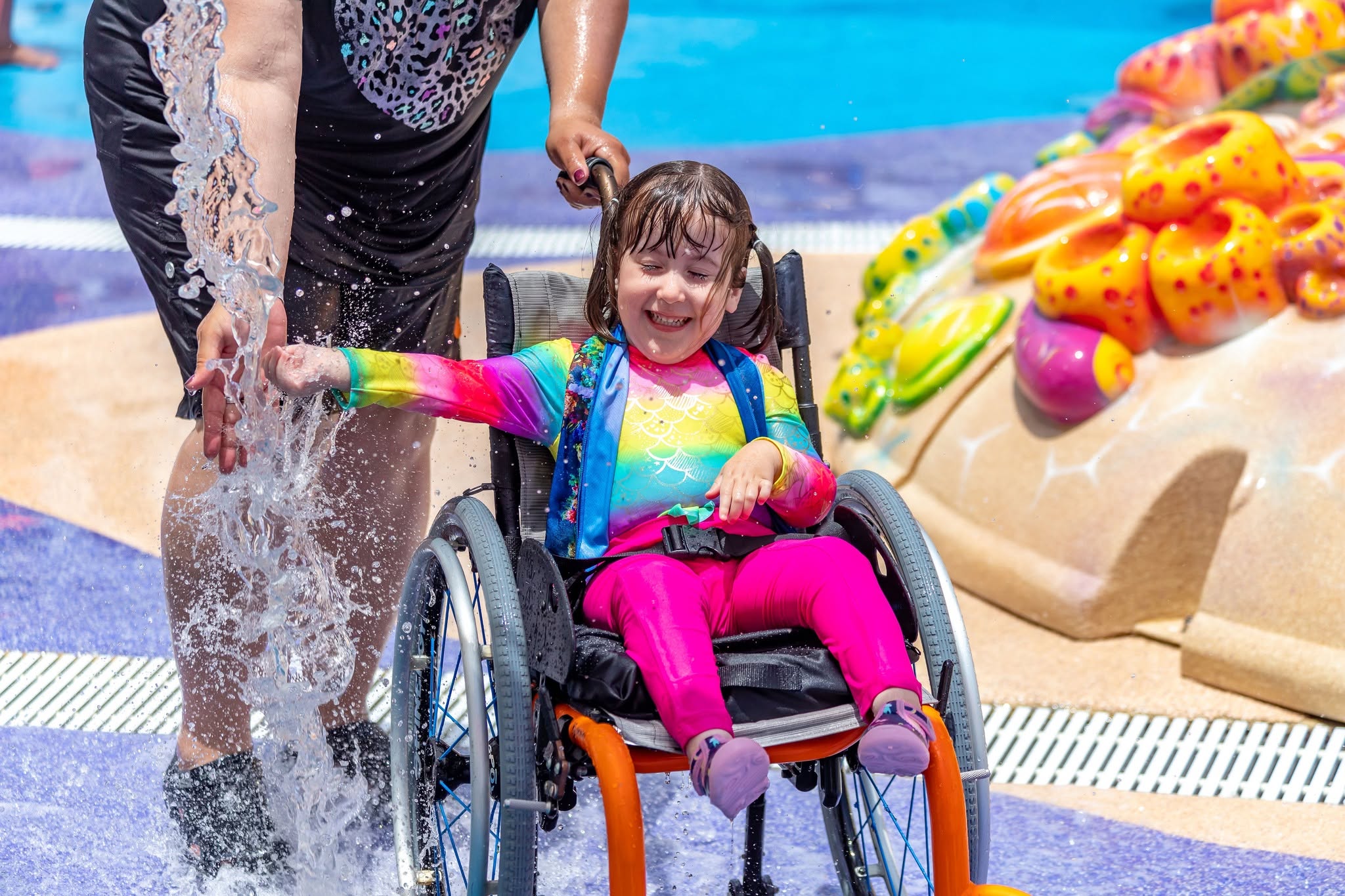
Chlorine and saltwater are notoriously brutal on personal power chairs and custom titanium frames. High-tier accessible parks will feature a Wheelchair Valet where you can borrow specialized equipment free of charge. For example, the world-renowned Morgan’s Inspiration Island provides guests with revolutionary, custom-designed pneumatic waterproof wheelchairs (like the PneuChair) and tilt-in-space aquatic chairs that allow full immersion without ruining personal property.
2. Zero-Depth Entry and Advanced Lifts
Transferring into a traditional pool lift can feel highly exposed. Truly inclusive parks design their splash pads, wave pools, and lazy rivers with zero-depth entry (sloped, beach-style ramps) so guests can roll directly into the water. For deep-water attractions, multiple discreet, well-maintained mechanical lifts should be readily available.
3. Thoughtful Thermal and Sensory Zones
Accessibility isn’t just about physical ramps; it’s about comfort and biology. Many older adults and individuals with certain neurological conditions struggle with temperature regulation. Innovative parks feature climate-controlled aquatic zones, such as the Rainbow Reef warmed-water attraction, which keeps the water warmly regulated so guests don’t lock up or experience muscle spasms from standard, chilly water temperatures.
4. Adult Changing Tables and Hoist Lifts
A standard “accessible stall” is rarely sufficient for families who need to assist an adult or older teenager with changing into swimwear. Look for parks that explicitly advertise universal changing rooms equipped with adult-sized changing tables and Hoyer lifts.
The AbleTravels Water Park Accessibility Checklist
Before you buy your tickets, pull up the park’s website or call their guest services team to cross-reference this quick checklist:
| Feature to Check | What to Look For | Why It Matters |
| Queue Accommodations | Virtual queuing or “Yellow Wristband” priority access. | Prevents dangerous exhaustion or overheating from standing on hot concrete lines. |
| Waterproof Medical Bags | Complimentary dry bags for ventilators, oxygen tanks, or trachea covers. | Essential for guests with respiratory needs who still want to enjoy splash zones. |
| Slide Transfer Systems | Wide, slip-resistant transfer platforms at the top and bottom of slides. | Ensures safe, dignified transfers out of a wheelchair and onto a slide mat. |
| Sensory Break Areas | Designated quiet zones or first-aid rooms away from shouting crowds and loud music. | Crucial for neurodivergent guests or older adults prone to sensory overload. |
3 Pro-Tips for a Smooth Aquatic Adventure
• Call Ahead for Equipment: Specialized waterproof wheelchairs are almost always distributed on a first-come, first-served basis. Call guest services the morning of your visit to check availability and peak arrival times.
• Invest in Padded Prosthetic Covers: If you or a loved one uses a prosthetic limb, check the park’s rules. Many manufacturers prohibit hard prosthetics on fiberglass slides to avoid scratching. Bringing a neoprene or padded wrap ensures you meet safety guidelines without being turned away.
• Locate First Aid Early: Water park first aid stations are hidden gems. They are typically air-conditioned, offer quiet spaces, and frequently house the only adult changing tables on the property.
The tide is definitely turning. With destinations leading the charge in inclusive engineering, the dream of a stress-free, fully accessible day at the water park is closer than ever before.
Have you visited a water park that blew you away with its accessibility? Leave a comment and let us know!

0 Comments