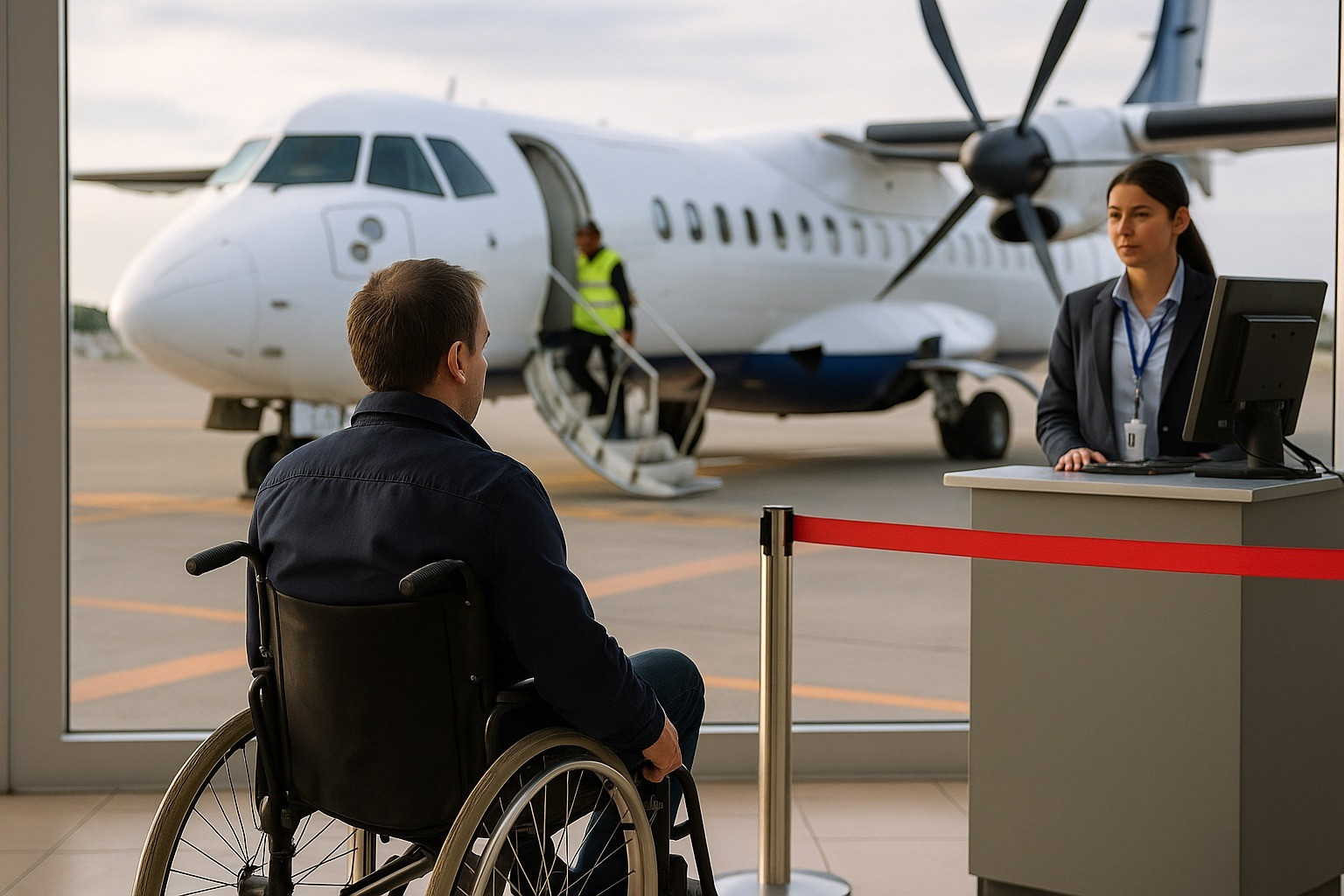
If you’ve ever rolled up to an airport gate with a wheelchair or scooter, you already know the drill. You hold your breath, pray your mobility device doesn’t end up in pieces, and hope the staff assisting you actually know what they’re doing. Ironically, on a recent trip, my mobility scooter took significant damage from poor mishandling.
But as of this week, the federal government is finally forcing airlines to step up their game where it counts the most: actual, hands-on training.
According to a great piece of reporting by Shaun Heasley over at Disability Scoop, a massive federal mandate officially takes effect this week. By Wednesday, every single airline employee and contractor who physically assists travelers with disabilities—or handles wheelchairs and scooters—must complete rigorous, hands-on training.
No more checking a box on an online quiz. The Department of Transportation (DOT) is requiring staff to prove they know exactly how to handle our gear and our bodies safely and respectfully.
What the New Training Actually Covers
This isn’t just a refresher course; it’s a blueprint for basic human dignity in the skies. Under the new rules, airline personnel have to demonstrate competency in:
• Aisle Chair Safety: Knowing how to properly use aisle chairs and safely transfer passengers to and from aircraft seats.
• Real Communication: Learning how to effectively talk to, and take direct instruction from, travelers with disabilities.
• Gear Handling: Learning the nuts and bolts of how to configure, load, secure, and unload complex power wheelchairs and scooters across different types of aircraft.
The Backstory: Where Things Stand
This mandate is a surviving piece of the landmark 2024 “Wheelchair Rule,” which was hailed as a massive win for passenger rights. Among other things, that original rule made it an automatic violation of the Air Carrier Access Act if an airline damages or delays your chair.
Now, if you’ve been following the political headwinds, you know the current administration recently announced a delay on several parts of that rule while they work on a revised “Wheelchair Rule II” (expected this August). But the DOT drew a hard line on this training piece. They told Disability Scoop that the June 17, 2026, deadline for initial hands-on training remains entirely non-negotiable.
Why This is a Big Deal (and Why We’re Watching Closely)
The stakes couldn’t be higher. To put it in perspective, federal data shows that airlines mishandled nearly 10,000 wheelchairs and scooters last year alone. That isn’t just “lost luggage”—that is someone’s independence, mobility, and freedom stripped away.
As Robert Thomas, a U.S. Army veteran and national president of Paralyzed Veterans of America, perfectly pointed out to Disability Scoop:
“For too long, people like me have suffered injuries, damaged equipment, and in the most tragic cases, loss of life, simply because airline personnel were not prepared to assist them.”
Thomas noted that while many carriers are working hard to comply, the real test comes at the gate. We’ll know this rule is a success when we can travel without the constant anxiety of our equipment being wrecked.
The Carrier Response: Compliance vs. Pushback
So, how are the airlines reacting? Predictably.
American Airlines and Southwest have both stated they intend to comply or have already enhanced their training programs. United and Delta stayed quiet when asked for comment. Meanwhile, Airlines for America (A4A), the trade group representing the major carriers, offered up the usual PR lines about being “dedicated to an inclusive travel experience”—which rings a bit hollow considering they filed a lawsuit last year claiming the DOT overstepped its authority with the Wheelchair Rule.
The AbleTravels Take
Laws and mandates are great on paper, but execution is everything. We’ll be keeping a close eye on how this rolls out at airport gates across the country this summer. Training airline staff to treat expensive, custom mobility devices like medical necessities—and treating the people who use them with dignity—should have been the standard all along.
Let’s hope this deadline is the turning point we’ve been waiting for.
We try to keep up with all the accessibility in the news on AbleTravels.com. Subscribe to our newsletter to get all the latest accessibility news along with our take on it.

0 Comments