
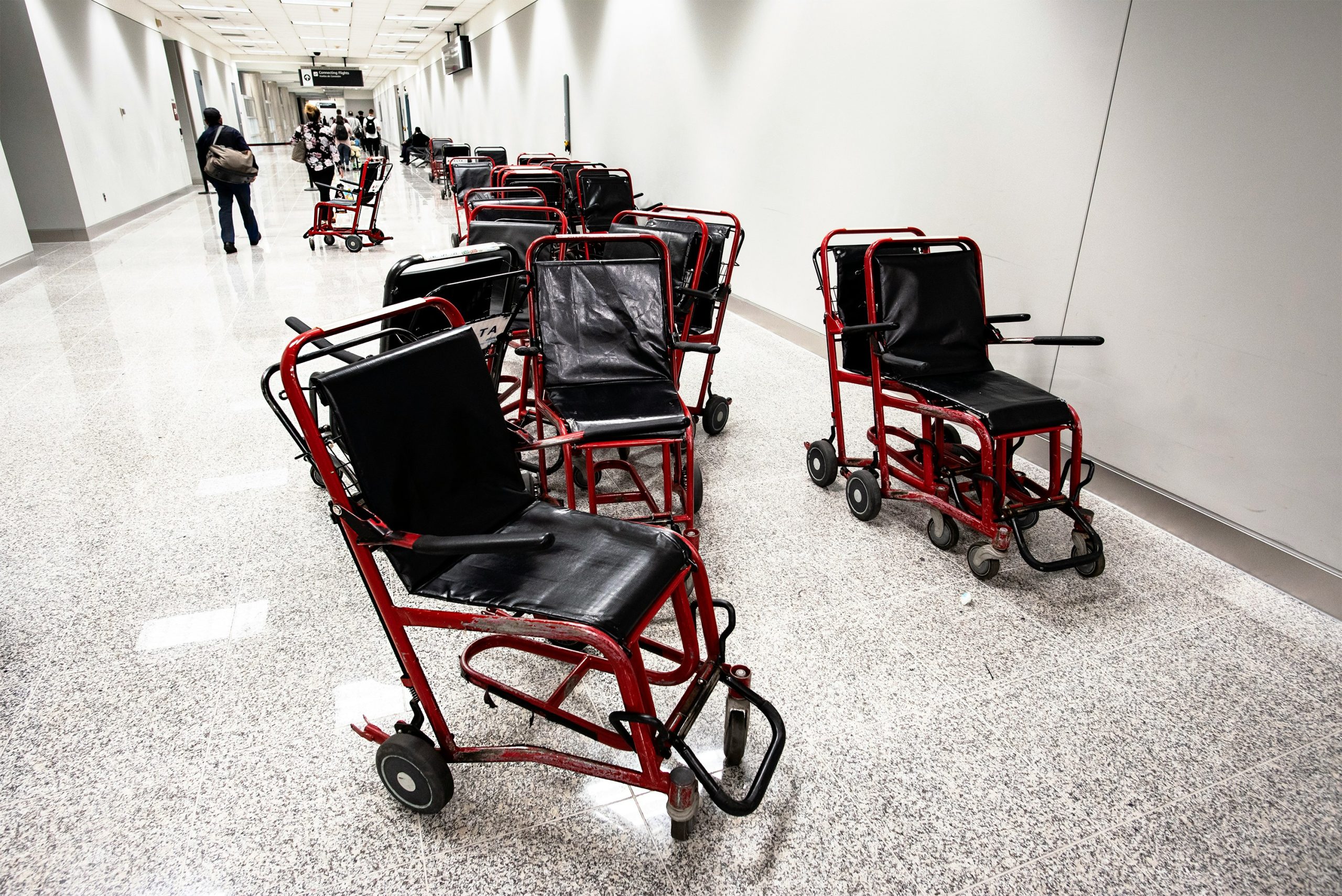
Accessible air travel has always been framed as a future goal. It was always something airlines were “working toward” but for travelers with disabilities, that future has meant decades of compromise, stress, and lost independence. But the landscape is beginning to change, and not because airlines suddenly became altruistic. No, far from it, in fact.
In 2026, the U.S. Department of Transportation (DOT) implemented some of the strongest accessibility enforcement measures the airline industry has ever seen. These changes reshape how airlines must serve passengers with disabilities and what happens when they fail.
There have been several small, but meaningful changes made recently that are noteworthy.
What Is Accessible Air Travel — and Why Has It Failed So Far?
Accessible air travel means more than boarding assistance or priority seating. It includes:
• Safe handling of mobility devices
• Functional onboard accessibility equipment
• Trained staff
• Predictable, enforceable accountability
Historically, airlines have treated accessibility as a customer‑service issue instead of a civil rights obligation. The result? Damaged wheelchairs, missed assistance, inaccessible lavatories, and zero consequences beyond apologies.
The DOT’s recent actions signal a shift from voluntary compliance to enforceable access.
Mandatory Onboard Wheelchairs: A Foundational Change
Starting in late 2026, all new aircraft with 60 or more passenger seats must include ADA‑compliant onboard wheelchairs.
This is not a cosmetic upgrade. It directly addresses one of the most persistent failures in air travel accessibility: the inability for wheelchair users to use aircraft lavatories independently.
Why This Matters
Modern onboard wheelchairs now include:
• Narrow widths that fit aircraft aisles
• Omnidirectional wheels for maneuverability
• Telescoping backs for safe transfers
• Designs that allow access inside lavatory doors
For the first time, accessibility extends beyond the seat. Privacy, bodily autonomy, and safety are no longer optional.
Accessibility Failures Now Trigger Guaranteed Refunds
One of the most powerful DOT updates doesn’t involve equipment at all, it involves consequences.
The DOT now classifies accessibility failures as “significant changes” to a passenger’s itinerary. That includes:
• Failure to provide required assistance
• Damage to mobility devices
• Accessibility services not delivered as promised
When these failures happen, passengers with disabilities are now entitled to a guaranteed refund not a voucher, not an apology.
Why Refunds Matter
Refunds shift accessibility from courtesy to obligation. When airlines face real financial consequences for failures, systems change faster.
This rule acknowledges a simple truth: disabled travelers pay the same fare and deserve the same reliability.
Airline Accountability: Reinvesting Penalties Where They Matter
In a major shift from decades of practice, the DOT has changed how accessibility penalties are enforced.
Instead of sending fines directly to the U.S. Treasury, airlines are now required to reinvest penalties into accessibility improvements, such as:
• Better mobility device handling systems
• Improved staff accessibility training
• Technology to track and protect wheelchairs
• Infrastructure that supports disabled travelers
This approach fixes problems instead of just punishing them.
For disabled travelers, it means enforcement that actually improves future trips not just press releases.
What Disabled Travelers Should Do Right Now
These rules only work if travelers know and use them. Here’s how to protect yourself:
1 Document everything: times, names, photos, and flight numbers
2 Request refunds immediately when accessibility assistance fails
3 Report violations to the DOT every time
4 Ask for written confirmation of accessibility services before flying
Accessibility rights are enforceable rights but only when we exercise them.
Accessible Air Travel Is a Civil Right — Not a Special Request
These DOT changes don’t represent special treatment. They correct systemic exclusion.
Airlines were never unaware of accessibility gaps they simply weren’t penalized for ignoring them. That era is ending.
Accessible air travel is about participation: work, family, education, and freedom of movement. Anything less is discrimination by design.
The advocacy work isn’t finished but the rules finally have teeth.
Read more: Vision 2030: Why Accessibility Is Becoming the New Standard in Travel

0 Comments