
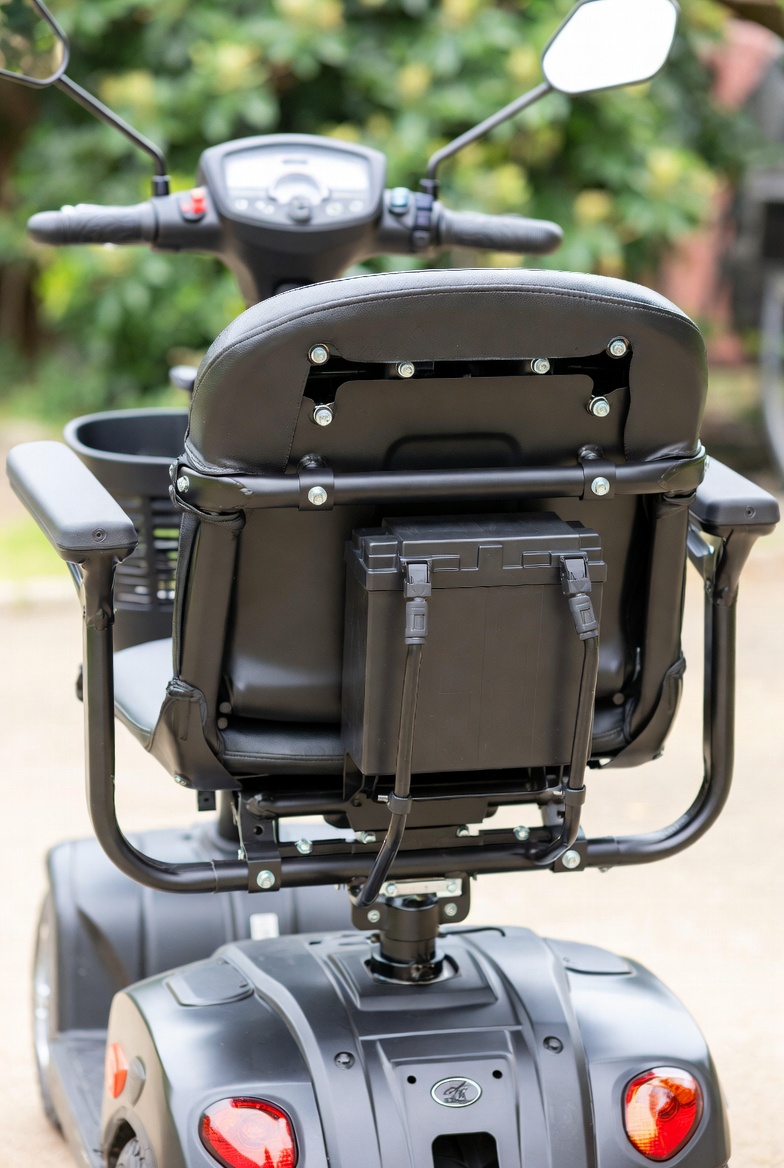
In the travel landscape of 2026, navigating the regulations for lithium-ion batteries in mobility scooters requires a balance of safety compliance and legal rights. While “lithium bans” are frequently discussed in the media and in social media forums, federal laws provide specific protections for travelers with disabilities to ensure their mobility aids are accommodated.
The Federal Foundation: Rights for Travelers with Disabilities
Under the Americans with Disabilities Act (ADA) and the Air Carrier Access Act (ACAA), mobility devices are categorized differently than standard consumer electronics. While cruise lines or airlines may ban recreational lithium-powered items like hoverboards or e-scooters, they are legally required to accommodate wheelchairs and mobility scooters.
Federal mandates generally state:
• Accommodation is mandatory unless a device poses a “direct threat” to safety that cannot be mitigated.
• Service providers must allow these devices, though the specific battery chemistry determines whether it is stored in the cargo hold or the cabin.
According to Technical Safety Consultant for Bullocks Freightmaster International, Graham Bullock, it really boils down to transparency rather than actual bans.
“The 2026 landscape for mobility travel isn’t about ‘lithium bans,’ but rather ‘lithium transparency.’ While regulators like the FAA and IATA have tightened documentation requirements, the core right to travel with a mobility aid remains protected. The key for travelers today is a shift from ‘Can I bring this?’ to ‘How do I prove this is safe?’ Clear manufacturer labeling and a 30% state-of-charge for shipping have become the global gold standards for ensuring accessibility doesn’t compromise aviation safety.”
The “Watt-Hour” (Wh) Threshold
Safety regulators, including the FAA and the International Maritime Organization (IMO), use energy capacity—measured in Watt-hours (Wh)—to determine transit rules.
| Battery Type | Capacity | Transit Protocol |
| Small Lithium | Under 160Wh | Usually permitted to remain installed in the scooter during transit. |
| Medium Lithium | 160Wh to 300Wh | Often requires the battery to be removed and carried into the cabin/stateroom. |
| Large/Industrial | Over 300Wh | May require special “Dangerous Goods” documentation and advance approval. |
Calculation Tip: If your battery only lists Voltage (V) and Amp-hours (Ah), multiply them to find the Watt-hours ($V \times Ah = Wh$). For example, a $24\text{V}$ battery with $12\text{Ah}$ is $288\text{Wh}$.

What is Allowed vs. Prohibited
As of 2026, security at ports and airports has become more rigorous regarding battery origins and conditions.
Allowed Items:
• OEM Equipment: Batteries provided by the original scooter manufacturer are rarely challenged.
• UL-Certified Labels: Clear, factory-printed labels showing safety certifications (like UL or CE) are essential for smooth check-in.
• Foldable “Travel” Scooters: Most models marketed for travel utilize batteries specifically designed to stay under the 300Wh limit.
Prohibited Items:
• Visible Damage: Any battery showing signs of swelling, “pillowing,” or corrosion will be denied boarding.
• Unbranded/Aftermarket Cells: “Generic” replacement batteries purchased from unverified online marketplaces are increasingly seized by security due to fire risks.
• Unattended Charging: Many cruise lines, including Disney Cruise Line, now prohibit charging mobility devices in cabins while the occupants are away or sleeping.
Preparation Checklist for Mobility Travel
To ensure a seamless journey, travelers should follow these standardized steps:
- Request an MSDS: Contact the manufacturer for a “Material Safety Data Sheet” for the battery. This document proves the battery is safe for transport.
- Early Declaration: Notify the airline’s accessibility desk or the cruise line’s Special Needs department at least 30 days before departure.
- Verify Labels: Ensure the Wh rating is legible on the battery casing. If it is faded, bring the user manual to verify the specs for security officers.
- Cabin Carry-Only: By federal law, if a lithium battery must be removed from a scooter, it must be carried into the passenger cabin. It is strictly prohibited in checked luggage or cargo holds because fire suppression systems in those areas are not designed for lithium fires.

0 Comments